What a boiler element does in a commercial kitchen
A boiler element is the heating part inside a water tank, boiler or hot water unit that brings water up to temperature and keeps it there. In foodservice use, that means steady hot water for dishwashers, bain-marie units, urns, sinks and other prep or wash areas where temperature consistency matters.
When an element fails, the unit often heats slowly, trips the supply, or stops heating altogether. In some cases the element still powers up but is scaled over and working far below its rated output. We see this a lot in Johannesburg, Pretoria and coastal areas such as Durban and Cape Town, where water quality and humidity can shorten service life if the unit is not cleaned and checked regularly.
Sizes, wattages and fitment options to match your unit
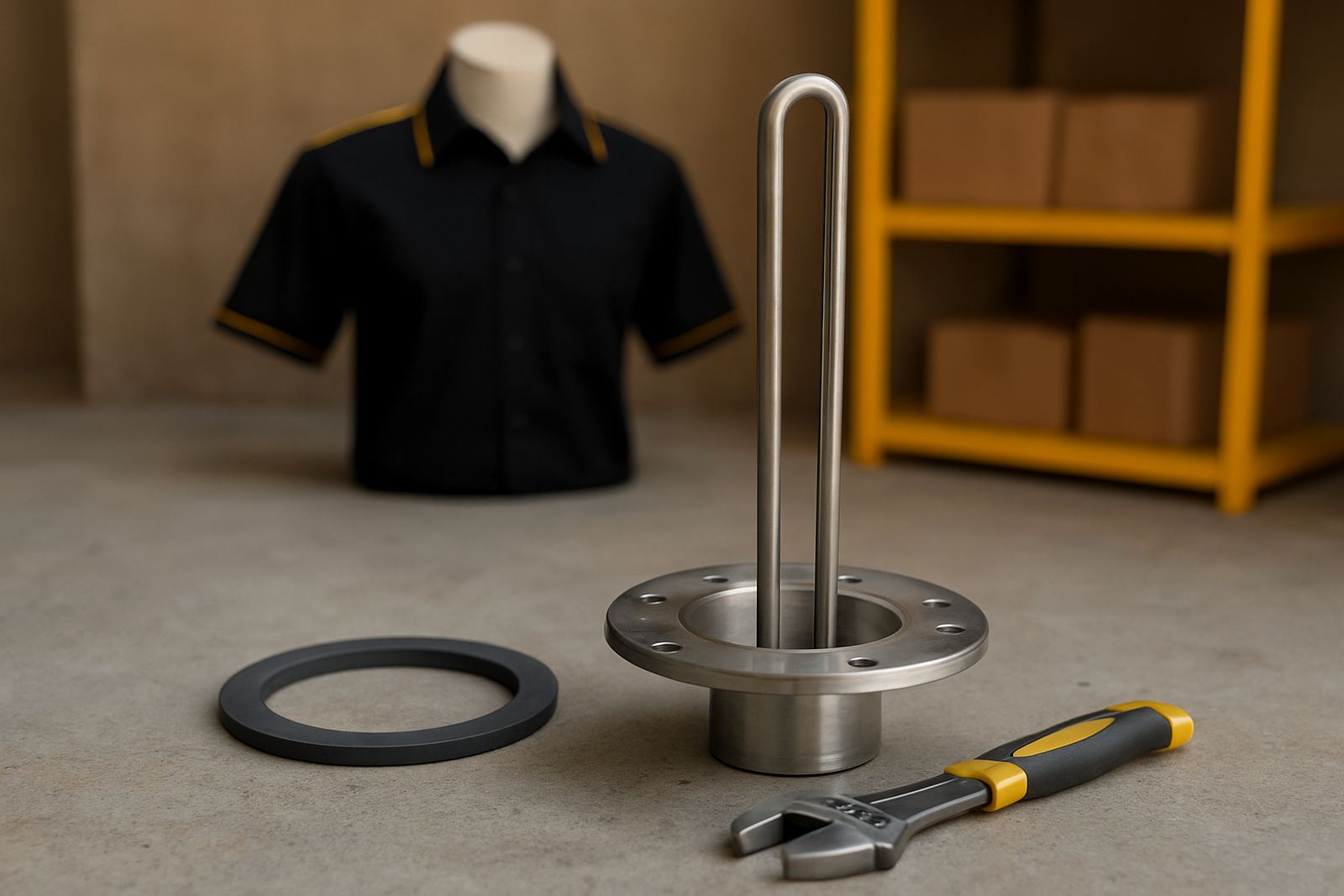
Boiler elements are not one-size-fits-all. The correct part depends on the tank design, mounting pattern, voltage and wattage. Common options include straight screw-in elements, flange elements and immersion styles for hot water vessels. The physical size matters too, because the element must sit in the correct position inside the tank without fouling baffles, sensors or internal pipe work.
When ordering, check the old element tag if it is still readable, plus the length, thread size and terminal layout. If the original part is burned out or corroded, measure the opening and send a clear photo of the mounting face. Our team in Midrand handles part identification and compatibility checks daily, so we can help match the replacement before dispatch.
- Voltage: 220 V, 380 V and other commercial supply options
- Wattage: from low-output holding units to high-output boiler loads
- Mounting: screw thread, flange plate or immersion style
- Connection: spade terminals, threaded posts or wired lead ends
- Material: copper, stainless steel or sheathed types, depending on the unit
Where boiler elements work best
These elements suit foodservice equipment that needs controlled hot water rather than direct flame heating. They are used in dishwashers, coffee and tea boilers, soup warmers, hot water storage tanks, rinse tanks and some hot holding systems. In a hotel kitchen, canteen, bakery or takeaway, a failed boiler element can delay opening, slow service and put extra load on other equipment.
For sites on municipal water with high mineral content, elements that scale quickly may need more frequent inspection. In coastal towns, terminals and wiring can also corrode faster if the cabinet is exposed to steam or salt air. If the application is in a prep area with regular washdowns, choose a part that suits the enclosure and the way the unit is cleaned. A dry element used in the wrong tank can burn out fast, so proper matching matters.
- Dishwashers and glasswashers
- Boilers and hot water storage tanks
- Hot holding and service units
- Sinks and rinse stations with built in heating
- Tea urns, soup kettles and similar catering vessels
Installation points and power checks before fitment
Before fitting a new boiler element, isolate the supply and confirm the unit is safe to work on. Check for burnt terminals, damaged insulation, loose earth connections and signs of overheating around the thermostat or control switch. If the old element failed because of low water level, scale build-up or a sticking thermostat, replace the cause and not only the part.
Commercial units may run on single phase or three phase power, so the circuit must match the element rating. Incorrect supply can cause nuisance tripping, slow heat-up or repeat failure. Where the unit is tied into a busy dishwashing line, post-fit testing is worth doing. Our service team can assist with element fitting, thermostat fitting and dishwasher part fitting where needed, including onsite parts support in selected areas.
- Confirm the supply voltage before ordering
- Check the earth and neutral condition at the appliance
- Replace seals and gaskets if the tank has been opened
- Test the thermostat and safety cut-out after fitment
- Refill the vessel before switching on the heater
Care, scaling and service life in local conditions
Boiler elements last longer when the water system is kept clean and the tank is not allowed to run dry. Scale forms on the heated surface and acts like an insulating layer, which makes the element work harder and draw more current. That is a common reason for early failure in areas with hard water, especially where the unit is used all day. A quick descale during planned maintenance can save a costly shutdown later.
We advise checking the element, thermostat and wiring on a set service cycle rather than waiting for failure. If the unit is part of a dishwasher or hot water system in a restaurant or hotel, plan for seasonal demand too. Summer rushes, load-shedding recovery and repeated restarts can put strain on heating parts. Keep a spare on site where downtime would interrupt service. It’s also a good idea to inspect the terminal cover and sealing washer for heat marks or moisture ingress.
What to send when you need the right replacement
To avoid the wrong part and a wasted trip, send as much identifying detail as possible. A photo from the side, the terminal end and the mounting face is usually enough to start. If the old part still has a tag, include the code and any voltage or wattage markings. If there is no label left, give the appliance make and model, the tank size, and whether the element is screw-in or flange mounted.
FoodServ Parts Store operates online nationally from Midrand, with coverage across Johannesburg, Pretoria, Durban, Cape Town and Bloemfontein. The team includes technical parts support, warehouse dispatch and field fitting coordination, so we can help with part checks before it leaves the depot. For busy kitchens, that saves time and avoids a second shutdown. If you are unsure, send the old element photo and we will work it through with you.
- Appliance make and model
- Old element photo and all markings
- Voltage and wattage rating
- Mounting type and overall length
- Any fault symptoms, such as tripping or no heat
Key facts
| Product type | Commercial boiler heating elements |
|---|---|
| Typical use | Water tanks, boilers and hot holding systems |
| Supply | 220 V, 380 V and other commercial options |
| Mounting styles | Screw-in, flange and immersion types |
| Materials | Copper, stainless steel and sheathed elements |
| Support | Part identification, compatibility checks and fitting assistance |