
What a grill element does in daily service
A grill element is the heating part that sits in the upper section of a salamander or grill compartment and gives off fast radiant heat. It is used for browning cheese, finishing steaks, toasting buns, melting toppings and getting a clean colour on plated dishes without waiting for the whole cavity to warm up.
In commercial use, the element has to reach temperature quickly and hold it under repeated opening and closing. That matters in hotels, takeaways, canteens and pub kitchens where service periods can be hard on equipment. If the element is slow, uneven or spots out, the grill section starts costing time and power, and the result is patchy cooking.
Sizes, shapes and mounting options to check
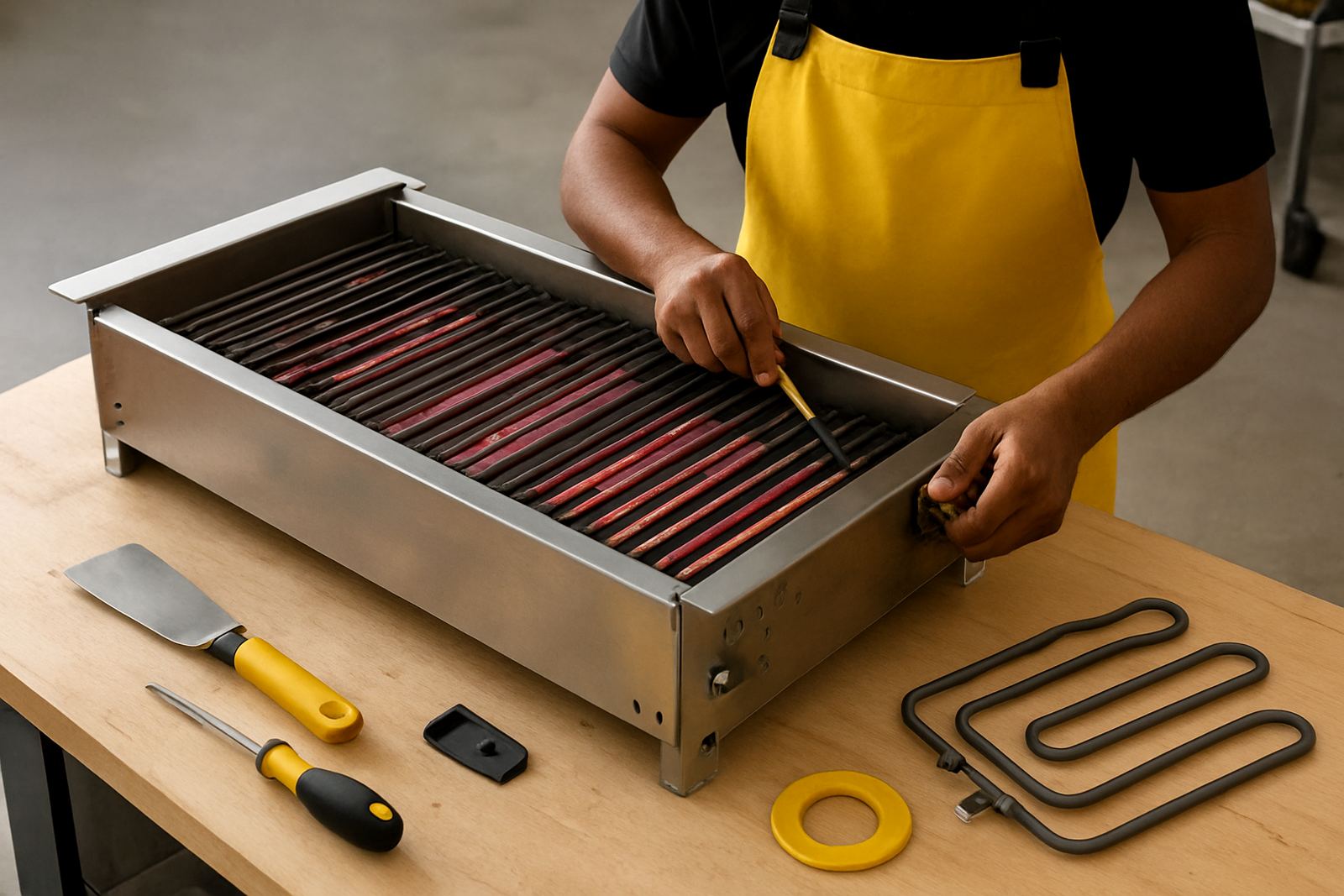
Grill elements are not one-size-fits-all. The important checks are overall length, heated length, terminal position, fixing points and the shape of the element itself. Some units use straight bar elements, while others use U-shaped or serpentine forms that spread heat more evenly across the top section.
Common options include different voltages and wattages, and some units use single-ended terminals while others need twin connections. When ordering, it helps to match the old part exactly, because a 20 mm difference in length or a terminal on the wrong side can stop a fit. If the original part is warped, measure the mounting span and the heated section rather than guessing from the bend alone.
- Overall length and heated length
- Voltage and wattage rating
- Terminal position and style
- Fixing hole spacing or bracket type
- Element shape and bend pattern
Where grill elements suit best
These elements suit salamanders, top grill sections, pass-side finishing units and overhead browning compartments used in light to medium duty commercial kitchens. They are especially useful where operators need direct heat for quick finishing rather than full chamber roasting. In busy kitchens the element often sits above the food, so heat is transferred by radiation, not by contact.
Grill elements are also common in compact kitchens where counter space is tight and a separate oven is not practical. In smaller towns and coastal areas, customers often ask for replacement parts after corrosion or steam damage, and that is normal with daily wash-downs and humid conditions. If the unit runs near extraction, salty air or open prep areas, terminals and insulation need a closer look during fitment.
Installation, power supply and safety points
Before fitting, isolate the appliance fully and confirm that the supply matches the replacement element. Commercial grill equipment may run on 220 V to 240 V single phase, or in some cases on higher rated circuits, so the rating plate and wiring must be checked rather than assumed. If the new part draws more current than the circuit allows, the breaker can trip or the wiring can heat up.
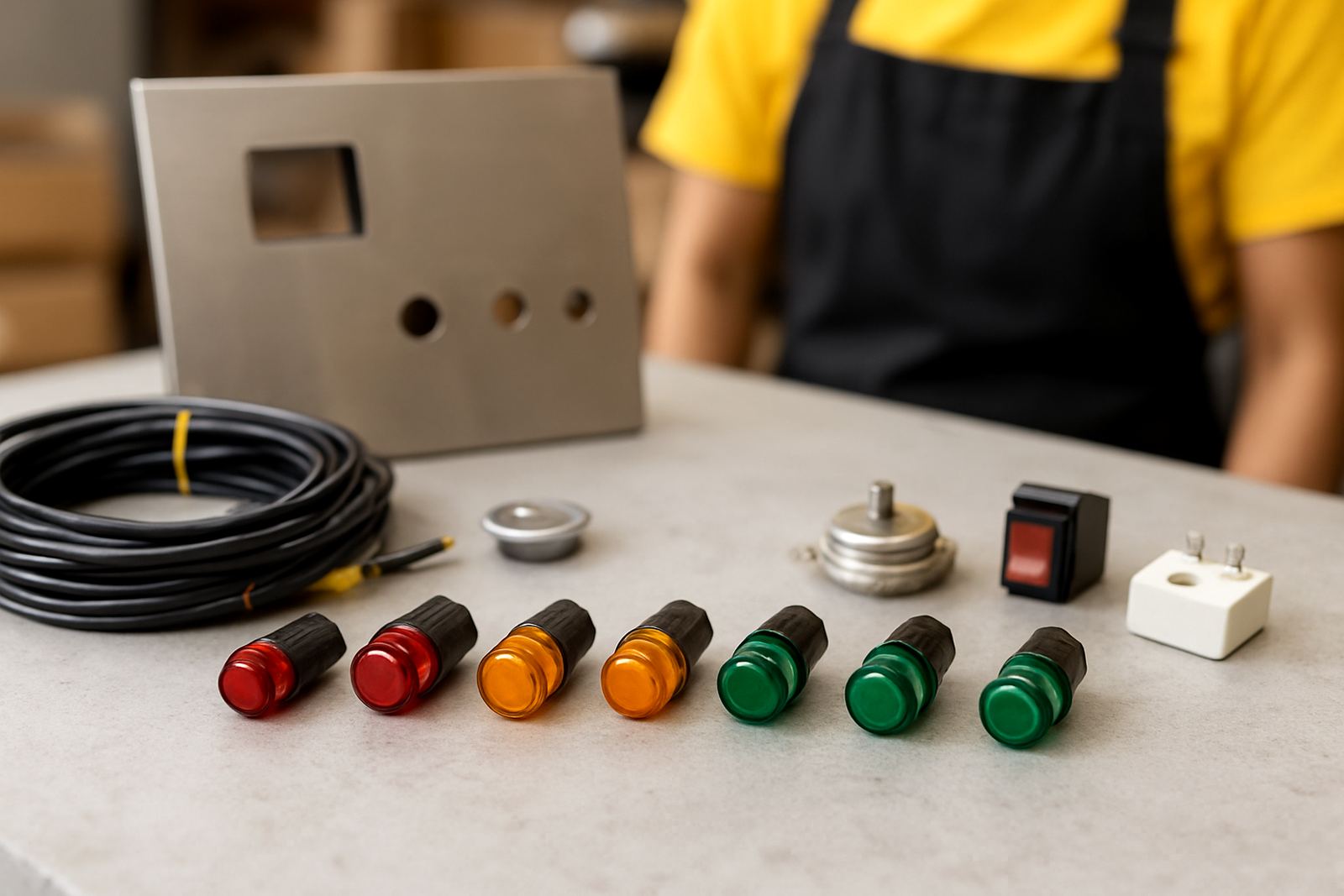
Installation should include checking the terminal lugs, ceramic supports, insulation sleeves and heat shields. If the old element failed after a wiring fault, moisture entry or loose connection, fitting a new part without checking the rest of the circuit can lead to another failure. A clean connection and correct clamping makes a big difference, especially in kitchens dealing with load-shedding restarts and frequent switching on and off.
- Isolate power before opening the unit
- Match voltage and wattage to the appliance rating plate
- Inspect terminals, supports and wiring for heat damage
- Confirm breaker size and cable condition
- Test heat-up after installation before returning to service
Care and servicing that extend element life
Grill elements last longer when grease build-up is kept under control and heat is allowed to cycle properly. Heavy carbon deposits trap heat and can create hot spots, while liquid spillages may attack terminals and insulation. A quick wipe-down after cool-down and a regular inspection for cracked supports or discoloured wiring helps avoid sudden downtime.
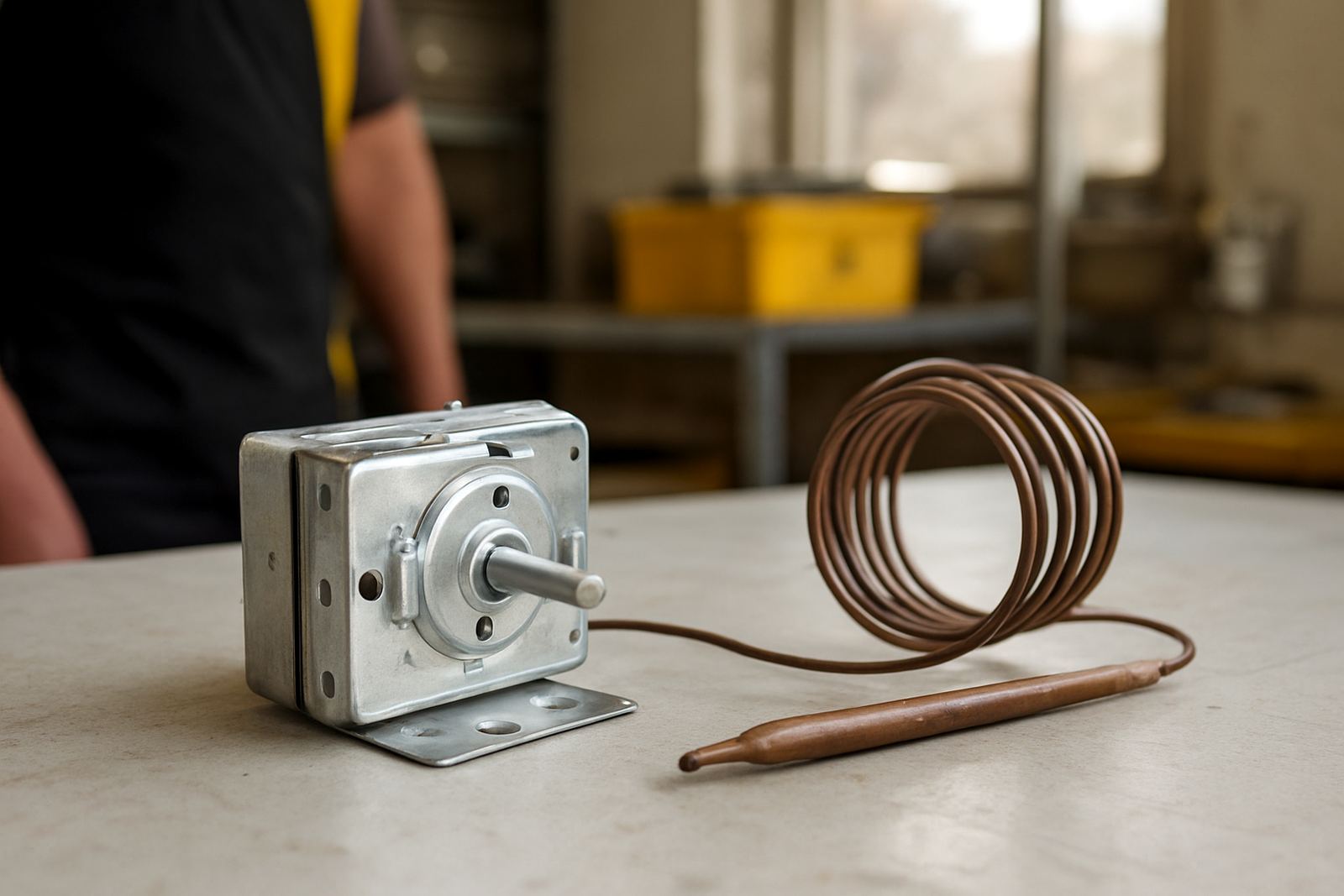
If the grill is used hard every day, look out for uneven glow, slow heat-up, tripping breakers or a burnt smell near the terminal box. Those are early signs that the element or the surrounding wiring needs attention. On some jobs the issue is not the element itself but a loose connector, a failing switch or a thermostat that is cutting out too early, so it pays to check the full circuit.
What to send us when ordering a replacement
The fastest way to get the right part is to send clear details from the old element and the appliance data plate. If the original part number is readable, that is ideal. If not, send measurements and a few photos from different angles. Our team can compare the shape, fixing method and rating so the replacement matches the unit in your kitchen.
For best results, include the appliance make, model, serial number if available, and the exact fault description. Tell us if the unit is gas-fired with an electric grill section, or a fully electric salamander. That helps us check compatibility before dispatch from Midrand, which saves time for kitchens in Johannesburg, Pretoria, Durban, Cape Town and Bloemfontein.
- Appliance make and model
- Photograph of the element and terminals
- Overall length and heated length in mm
- Voltage and wattage from the rating plate
- Any visible damage, burning or tripping symptoms
Key facts
| Product type | Upper grill element for commercial salamanders and grill sections |
|---|---|
| Common voltages | 220 V to 240 V, check appliance rating plate |
| Common formats | Straight, U-shaped and serpentine styles |
| Key measurements | Overall length, heated length, terminal position and fixing span |
| Typical use | Searing, browning, finishing and melting in foodservice equipment |
| Supply | National online dispatch from Midrand with compatibility checking |