
When a gas range starts slipping in service
A gas range is often the hardest working unit in a kitchen. It carries breakfast rush, lunch prep and supper service, then gets cleaned and lit again the next morning. When one burner goes weak or a flame safety part starts failing, the whole line slows down. In restaurants, hotel kitchens, takeaways, canteens and bakeries, that can mean longer ticket times and more pressure on the pass.
The common signs are easy to spot if you know what to look for. A burner may light late, burn yellow, lift off the head, or go out when the knob is released. You might hear clicking from the ignition area with no stable flame. In older units, heat can spread unevenly across pots and pans, so one side of the range cooks faster than the other. In many cases the fault is not the full appliance, it is a worn part that can be checked and replaced.
Parts we are asked for most on gas ranges
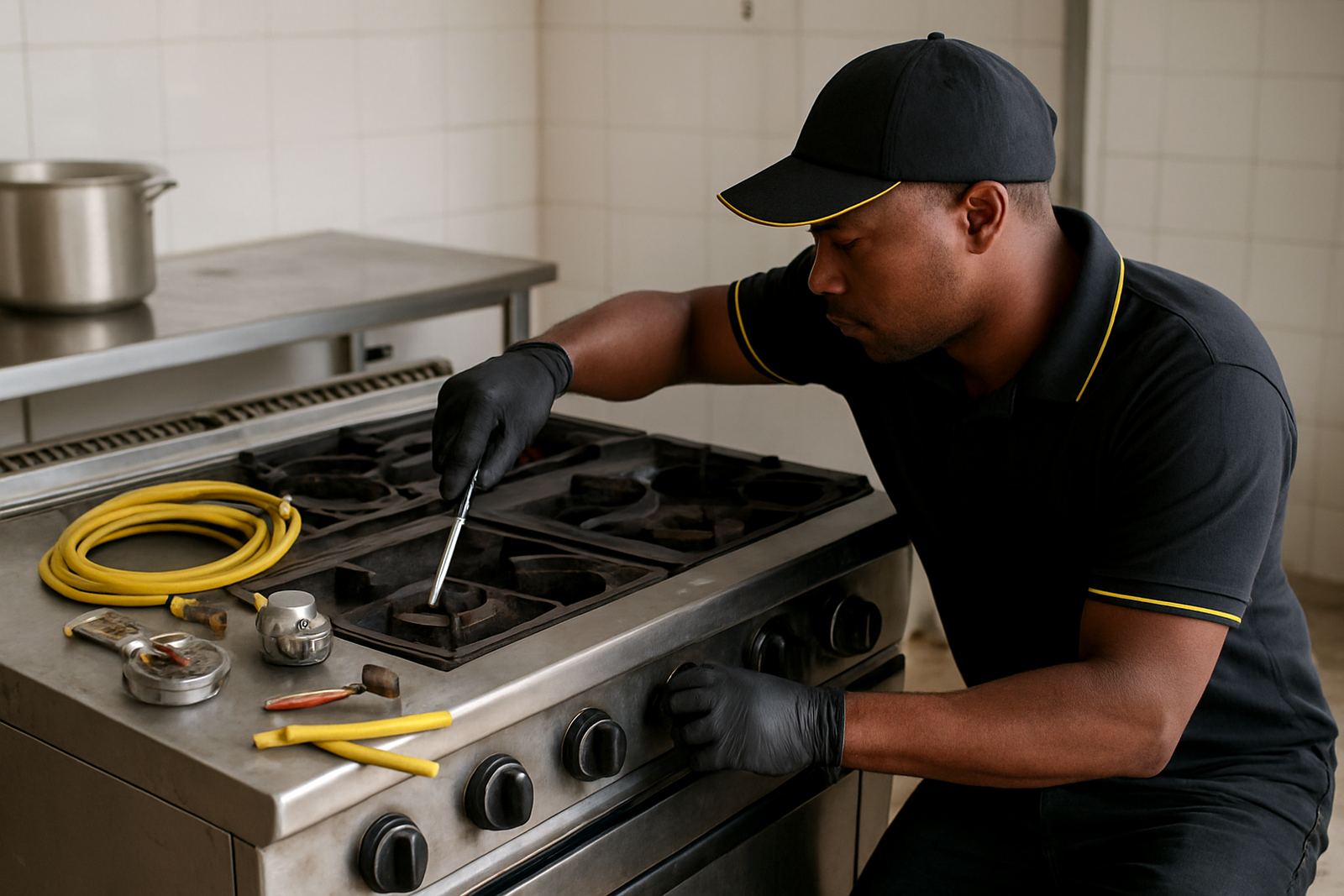
Most gas range jobs come down to a short list of items. Burners and burner heads wear through use, especially in kitchens that run long hours. Pilots can block with grease or dust. Valves can stick, leak or fail to give proper control. Flame safety components matter because they help keep gas flow under control if the flame goes out. Ignition switches, knobs and related wiring can also fail after heat and cleaning over time.
- Burners and burner heads
- Pilot parts and ignition parts
- Gas valves and control knobs
- Flame safety components and thermocouple style parts
- Switches, leads and related electrical controls
- Gaskets and seals around oven sections and access points
If you are sending photos, please include the full front of the range, the data plate and a close shot of the faulty part. That saves time and cuts down on the wrong part being ordered. A small mark or number on the part can matter a lot when matching the replacement.
How the kitchen layout affects the parts you choose
Gas range parts are not chosen in isolation. The kitchen layout and the way the unit is used matter just as much as the make and model. A range standing near an extractor with heavy steam and grease exposure will often need attention sooner than one in a dry prep area. Coastal kitchens in places like Durban or Cape Town can see more corrosion on fittings and fasteners, while inland kitchens may fight dust and power interruptions that affect ignition systems.
Think about clearance, ventilation and cleaning access before buying anything. If the unit sits tight against a wall or under a shelf, there must still be space to reach valves, pilot assemblies and rear panels. In busy sites, we often advise keeping a simple spare list on hand: one or two burners, a pilot set, the main control valve for the most used line and any switch parts that fail often. That way a breakdown does not turn into a three-day wait for one small item.
- Check the model plate before ordering
- Allow for safe gas shut off and service access
- Match the part to the exact burner size and layout
- Keep spare seals where heat and cleaning are frequent
Common mistakes that cost time and Rand
The biggest mistake is guessing. A valve that looks right may have the wrong inlet, thread or gas type. A burner that fits the tray may still sit too high and throw the flame pattern off. Another common problem is replacing only the obvious part and ignoring the cause. If a pilot keeps going out, the issue may be a weak thermocouple style safety part, poor flame position, or a draft near the range. If the kitchen has had load shedding or a recent power recovery event, ignition parts can also show signs of strain.
We also see delay caused by poor cleaning. Heavy grease build-up around burners, ports and pilot areas can hide the real fault. In some cases the unit is taken out of service when a proper clean and fit would have sorted it. That is why part identification matters before money is spent. It is better to check the part once than replace twice.
When you are planning maintenance, list the symptoms, the number of burners affected and whether the fault is constant or only happens when the unit gets hot. Those details help us match the right item faster. A short phone call or email with clear photos can save a lot of back and forth.
Budget ranges for gas range repairs and spares
Budgets vary because gas ranges are used in very different ways. A simple pilot or switch item may cost only a few hundred Rand, while a control valve, safety part or full burner assembly can move into the higher hundreds or low thousands. For most routine gas range repairs, kitchens should allow a practical parts budget of about R250 to R2 500 depending on the fault. Larger multi burner units, combined oven ranges or older imported equipment can run above that if several items are worn at once.
It also helps to budget for fitting and testing. A part on its own is only half the job. Once fitted, the flame needs to be checked, the unit tested for safe operation and the cook pattern confirmed. In a commercial kitchen that is not optional. If a part is fitted wrong, the unit can still be unsafe or waste gas.
- Small ignition or pilot parts: about R250 to R650
- Burners, knobs and related fittings: about R400 to R1 200
- Valves and flame safety parts: about R900 to R2 500
- Fitting and post-fit testing should be planned separately
What to send us for a faster match
For gas range parts, good information speeds everything up. The best order starts with the model plate, then a clear photo of the full unit and a close photo of the faulty area. If the problem is a burner, show the burner head, the support, the ignition point and the pipe connection. If the fault is a valve or safety item, include the knob side and the back side if you can reach it safely. Do not strip the appliance further than needed if gas is still connected.
We help with part identification, compatibility checks, burner fitting, thermostat fitting, gasket fitting, switch panel repairs, dishwasher part fitting where the same kitchen site needs it, onsite parts support and post-fit testing. From Midrand we dispatch nationally, with coverage for Johannesburg, Pretoria, Durban, Cape Town and Bloemfontein. If your kitchen is trading daily and needs the right part first time, that is the simplest way to keep the range in service.